Monday, June 19, 2006

There's Glass Between Us!


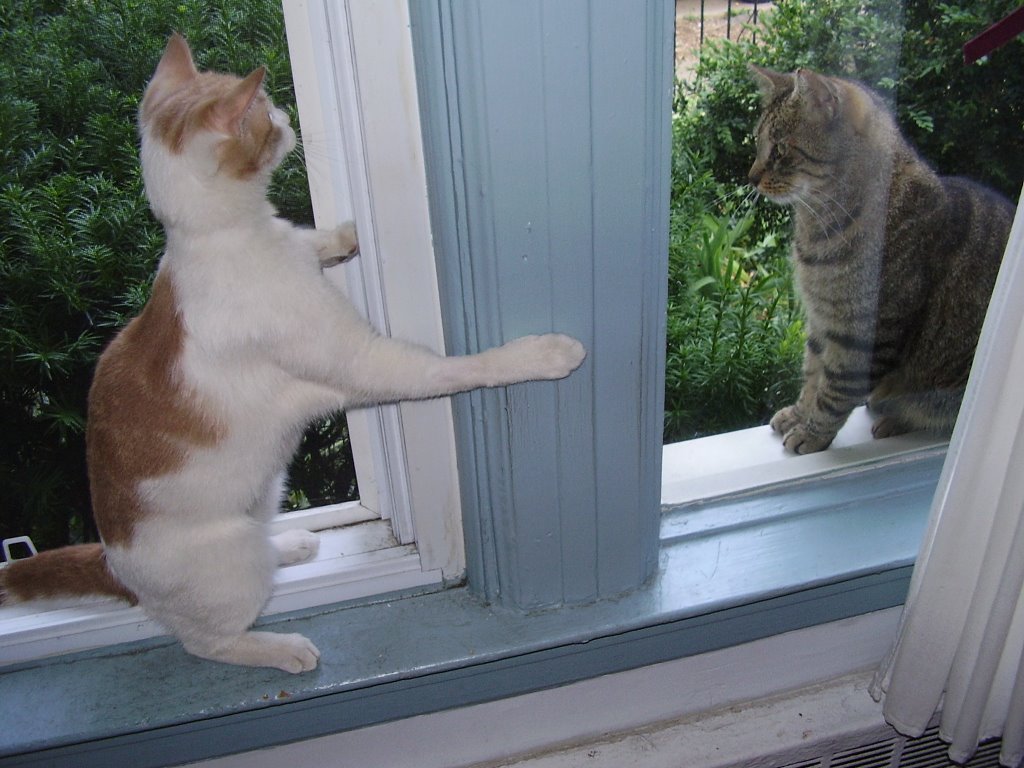
Little Ava, now rid of her hormonal sweetness, is turning out to be a regular tomboy kitten. She plays soccer, she corners poor submissive Angus, and she torments Vince through the window. And she doesn't walk anywhere. Why walk when you can run?

Vince is not pleased. "How come she gets to come inside and I don't? Just because she's a girl?"

Tuesday, June 06, 2006

See You at the Fair?

One of my favorite NYC literary events of the year is this weekend: the CLMP Lit Mag Marathon. On Sunday, June 11, we lowly writers can commune with editors and purchase back issues for $2, benefiting Housing Works. Let's go! See you there? Details:

EDITORS UNLEASHED!
The Magathon
New York Public Library's DeWitt Wallace Periodicals Room, 5th Ave. at 42nd St.
Saturday, June 10th from 4–6:30 PM

The Magathon kicks off the weekend with a celebratory “marathon” reading. Over a dozen readers—editors representing journals of every size and style, from promising upstarts to the oldest, most established—will present favorite selections from their latest issues.
Featured magazines include Call: Review, Columbia, Fiction, A Gathering of the Tribes, Gulf Coast, Home Planet News, Lips, Me Three, North Atlantic Review, Opium Magazine, A Public Space, Skidrow Penthouse, SLAB: Sound and Literary Artbook, StoryQuarterly, Swink, Terra Incognita, Tiferet, and Verbatim: The Language Quarterly.

BARGAINS! BARGAINS! BARGAINS!
Seventh Annual Literary Magazine Fair
Housing Works Used Book Café, 126 Crosby Street in Soho
Sunday, June 11th from 12–5PM
Lit fiends can take home armfuls of lit mags discounted more than 50% at only $2 a copy! Choose from hundreds of magazines from all over the country and hobnob with many of the editors who’ll be present to meet and greet. Proceeds go to Housing Works, a nonprofit organization serving homeless people living with AIDS, and to The Council of Literary Magazines and Presses, a nonprofit organization serving independent literary publishers.

Missed it by That Much

Thanks to Felicia Sullivan of Small Spiral Notebook for this link:

Entertaining blogger Summer Pierre is enjoying a fate we almost had, an infestation of criminally cute orange furry beings. Warning: these pictures might make you weep. I don't know about you, but I have a chemical reaction to cuteness like this.

Ah, if only. I'm pro-choice, but our little knocked-up Ava didn't get to make a choice exactly. We made it for her, and I have some regret. It's hard making choices for our four-footed friends. Heavy sigh. I haven't held a newborn kitten in years. If we didn't already have a cat surplus, it might have been worth letting nature take its course. Nature is not so bad.

The good news: Ava got her sutures removed and is healing well. She's dominant and aggressive. Likes cuddling with the dog, also likes attacking her new feline brother Angus, who is easily cornered and very submissive. She's active, playful, and demanding. Our little Feline American Princess. It's nice not being the only gal in the house. Even if I have to carry a water pistol.

On Milestones, and Irony

It wasn't long ago I was working hard to cut 300 words a day from #1 Novel, STARVING HYSTERICAL NAKED. My agent, an excellent editor, challenged me to remove 10,000+ words from that sprawling opus, and he was dead right.

So what the hell am I doing pushing to write 300 new words (and more) a day on #2 Novel, ALMA? I love irony. I'm happy to report I crossed the 10K milestone last week, and momentum is good. Diving into chapter four. And this is the fun part, even if I'll end up cutting it all. Full speed ahead, even as I cram it into coffee breaks and subway rides.

And what's the new novel about? Should I share, or will that jinx it? Aw hell, why not. An actress/preacher's daughter from a huge interracial family embarks on a new scene study class, and is assigned to explore the preacher's daughter of preacher's daughters, Tennessee Williams' recurring character Alma. Alma = soul. What is the soul, exactly? Especially to us lapsed Christians? I'm dying to figure this out.

But she's not even in the acting class yet. I'm caught up in backstory now, meaning it could be the book or it could be my homework for the book. I may end up cutting all of it, but it's stuff I need to know. About the character, the only one not adopted in her liberal family, and about how the six siblings relate to each other as adults. Adult siblings are a goldmine/minefield of material! Why haven't I played with it until now? Where have I been? I have a rudimentary outline, but I'm not looking at it. I'm just letting the character tell it her own way, which is a big meander. She thinks in circles, same as me.

I'm getting a new appreciation of backstory. What if backstory was the story? Why do we relegate it to the back? What if I called it nonlinear storytelling instead? What is wrong with chaotic reflection? So I'm plunging into the joy of memory, mixing my own experiences with imagined ones. We writers live for this shit.

Thursday, June 01, 2006

Old School in the House: Dorothea Brande

I think originality is the big carrot we writers chase. Even the ones who believe originality is a myth, even the ones who follow three-act formulae, we all want to find that THING. At least some secret part of us does.

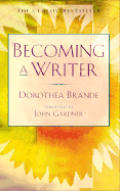
Consider this solution, from Dorothea Brande's 1934 classic, BECOMING A WRITER, which I've just read for the first time:

When the pitfall of imitation is safely skirted, one often finds that in the effort to be original an author has pulled and jerked and prodded his story into monstrous form. He will plant dynamite at its crisis, turn the conclusion inside out, betray a character by making him act uncharacteristically, all in the service of the God of Originality.

...So these stories fail from their own inconsistency, although the author has at his command, in the mere exercise of stringent honesty, the best source of consistency for his own work. If you can discover what you truly believe about most of the major matters of life, you will be able to write a story which is honest and original and unique. But those are very large "ifs," and it takes hard digging to get at the roots of one's own convictions.

As writers' books go, Brande's falls into more the category of self-help than craft. But lately, I'm finding the self-help category more, well, helpful. I can read a million volumes on narrative shape or musical sentences or making dialogue real--and I enjoy reading these things--but I still have to teach myself to write. We all have to teach ourselves to write. It's like basketball--you might know you suck at freethrows, but the only way to get past that is to stand on the line and shoot. A lot. Identify fundamental weaknesses, sure, but talking about flaws actually fixes diddleysquat.

So I vote for Brande's brand of writing book, at least today I do, and the bulk of it focuses on methods of the "hard digging" she mentions above. She offers several familiar but tried-and-tested solutions: early morning writing to exploit the leftover dreamstate, harnessing the unconscious through meditation (this is pre-1960's mind you), timed daily writing, putting off rereading/revising, close analysis of others' work, rhythmic imitation of others' work, etc. She does NOT push for heavy critiquing/workshopping for beginners, as she finds it cripples more than it helps.

One of her approaches I tried and enjoyed this week: spending some time in a language-free world. No reading, no talk. (Of course, in 1934, this meant closing out far fewer distractions. She warns against the distraction of the telephone. If she only knew the explosion of verbal distractions we face today!) The idea of the exercise: if one doesn't read or hear talk, then the unconscious will bubble up with writing. She encourages walking, knitting, playing solitaire, and other meditative, repetitive physical activities during the text-free time. And during this time, one may think about writing, but one may not write.

For me, this works like a charm. Nothing like forbidding something to make it more attractive. Nothing like setting aside nonproductive time to make my brain more productive. Writing has been going very well this week, and I have a new excuse to knit and pet my new cat.

Highly recommend this book, if you haven't read it already. It's quick and instructive, and way ahead of its time.

Saturday, May 27, 2006

Surgery Sucks


So, this little carrot top, now named Ava, has come inside. She's living in my writing room now, where she has her own food, her own bed, and a little company from me.

There will be no kittens. Yesterday we took her to our regular vet, and got the whole battery done: vaccines, tests, spay. I'm a little bummed that she won't get to be a mom, but we can commiserate on our childlessness. And she likes to cuddle. She also likes to stretch out, as you can see above.

She's smart. While we were out shopping, she took off her e-collar and hid it. She really didn't like that thing. She may also be a kleptomaniac. Things have been moving mysteriously around this room.

She is getting used to the dog, and is proving via the other indoor cats that sharing an enemy makes you closer. I keep catching the two boy cats napping together. We still may not keep her, if she doesn't figure out how to be nice to Angus. So if you know anyone who is looking...

Wednesday, May 24, 2006

I Don't Watch Idol, But I Do Read This.

I've become a fan of Susan DiPlacido's coverage of American Idol. Much better than the show itself, especially since Elliott (who spells his name RIGHT) was eliminated. I've tried to watch a few times, to get some ammo for the watercooler discussion, but usually give up before it's over.

Who needs to watch, though? Read this. DiPlacido writes some of the best TV criticism I've seen. And I'm sure she'll have plenty to say after tonight's big finale.

Saturday, May 20, 2006

At This Rate, It's 2+ Years to Crappy First Draft...

I promised myself to write 300 words a day on my new novel, ALMA. That ain't much, and even that ain't happening. Blame my day job, blame the pets, blame my knitting projects, blame CSI reruns every night on SpikeTV. Blame my generally happy life, in which I actually enjoy doing things other than writing. Blame my tired ass, too tired to get up at 5:00, like all the hardcore writers do, or stay up late, like all the drinky writers do. Blame the part of me that would rather do crossword puzzles and read on the subway.

Still, it's happening. Slowly but surely. It's literally taken me a month to have my character walk four blocks. True, she does think a lot on those blocks. And I'm walking those same blocks, literally, looking for metaphors and a little exercise. So I'm pushing out maybe 900 words a week.

Glacial. But I like the material. Glaciers can be exciting.

Or maybe it's more like unpacking a box. It's a dusty box, left behind by someone dead. I'm looking hard at each thing I take out of it. For clues. Connections. History. The Meaning of Life. Soul.

Sunday, May 14, 2006

Where the Dogs Wear Shoes


Our Wilbur has a certain gait when we take him into Manhattan to see his dermatologist. (Okay, call me a yuppie freak! I don't care! This doctor is really helping him!) Look at that tail. Chin up, sniffing the city air, looking at the tall buildings. A little freaked out and excited.

williecity2

Plus, the garbage cans smell extra delicious. And you occasionally see things like this:

More Listening: For My Fellow Podcast Addicts

A couple podcasts worth sharing lately:

1. Thanks to Moorishgirl for her tip about the Pen America media archives. They also have a podcast subscription available, which you can paste into your ITunes or find within ITunes podcast search. One very inspirational discussion: the 4/28/06 installment of George Saunders interviewing Israeli short story writer Etgar Keret. Keret is hilarious, which you probably knew already but it was a great discovery for me. And moving too. He talks about the taboos of Israel--he got hassled for naming a kitten "Rabin" in a story--and about his father, a holocaust survivor. The message in school for Keret was that if you weren't in the holocaust, you can never understand. But his father amended that cultural bias, telling him that though the feelings of the holocaust were intense, they were the same feelings anyone has: fear, hunger, cold. This is a good thing for any writer to hear, that it is possible--and acceptable--to imagine the pain of another. Of course Saunders gets in a few zingers too, as usual. His take on writing programs and the stories they encourage: "if the marriage is in trouble, there has to be a sick tree in the front yard." Hope I quoted that right...enjoy the whole podcast.

2. Frank McCourt reads from TEACHER MAN on Authors on Tour Live. He's a lively speaker, and a teacher's life is full of material. Reminds me why I left that life behind. I do not miss grading papers.

Saturday, May 13, 2006

Want to Take This Dreamsicle Home?

orangekitty2

Well, we have a new addition to our feral colony, which is exactly what we were trying to avoid. What is it about our backyard? Could it be she was looking to Vince for mob protection? Or, is my husband some kind of modern-day St. Francis of Assisi?

Anyway, here she is, and the good news is she's tame. We've looked for her people at city shelters, and no one has reported a cat missing by her description. And orange females are rare. Want to take her home?

She's about 7 months old, likes to be petted, tolerates the other cats all right, but does not like the dog. We'll take care of the neuter, vaccines, and FLV/FIV testing if you're interested. Any takers? Look at those gorgeous eyes! If you're not convinced yet, here's a back view--look at those tangerine stripes!

orangekittyback

Saturday, May 06, 2006

A Comic Duo Worth Checking Out


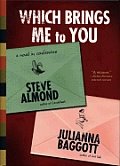
I've been curious about WHICH BRINGS ME TO YOU, the new epistolary novel by Julianna Baggott and Steve Almond, ever since reading Almond's article in P&W this month, then hearing his interview with Dennis Loy Johnson on Moby Lives Radio. Baggott came up with an interesting solution to a common problem: how does one write two narrators and have the voices distinct? Have two writers, that's how. Then you get fringe benefits too, like a built-in editor, a little healthy competition to motivate, and especially the funnest part of writing: you actually don't know where the story is headed.

But too, you have to deal with conflict and compromise. The healthy competition can turn unhealthy on a dime. You may stop enjoying each other's company. You may even want to kill each other. These are the risks of collaboration.

I went to their reading last night in NYC and found myself wondering if the lingering conflict between them is shtick or reality. I'm thinking it's a bit of both. They corrected each other during Q&A, and openly acknowledged the dark side of collaboration. But, their novel is based on a fairly gimmicky premise--boy and girl, both bad at love, meet at a wedding, then write confessional letters to each other--and Almond points out that had the writers not encountered conflict in the process, their narrators might not have transcended the gimmick into the meat of a real relationship.

Did I mention they are funny? Both of them. So I urge you to go hear them bicker in person (and read from the book). They have some tour left. Here's a schedule. I haven't read the book yet, but I plan to.

Monday, May 01, 2006

I'm Reading Sunday May 7 in Brooklyn

Next Sunday evening I'll read at Cheryl B's series in my old neighborhood. I'm stoked, it's usually a fun, lively crowd. Plus, I don't have to go into Manhattan.

Reading with me will be poets Joel Allegretti and Cynthia Bruckman, and fiction writer Brett Berk. Looks like an interesting lineup.

May 7th 7 PM

Atomic Reading Series
FREE
Lucky 13 Saloon
273 13th St. (5th Ave.)
Park Slope, Brooklyn

For more info. and reader bios here.

Sunday, April 30, 2006

Guest Blogger Willie Barr Reviews Manhattan Beach


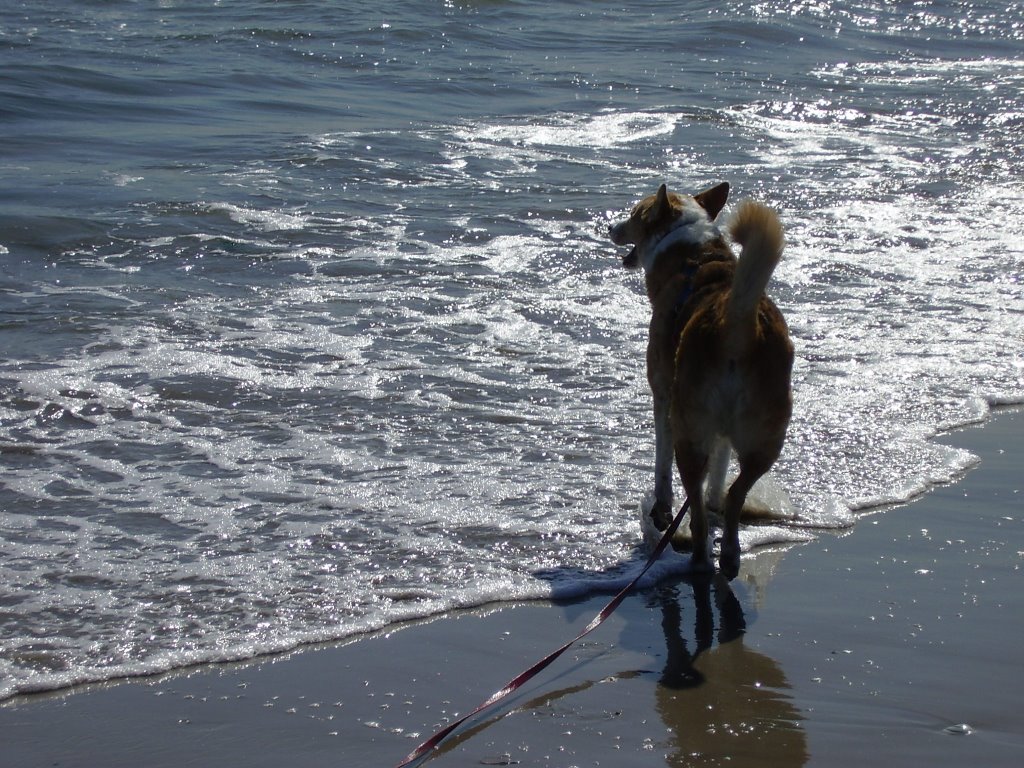
I knew something out of the ordinary was happening when my dad grabbed the long red leash. Hooray! Then my mom put the car harness on me. Double hooray! I was so excited I danced around the house barking.

I thought maybe it was too good to be true and couldn't help crying a little until we turned left on Ocean Ave instead of right. This meant we were not going to the doctor. After that I could relax and copilot until we got to Sheepshead Bay, where I was beside myself with anticipation. They kept yelling at me from the front seat to sit down, but how could I with all the crazy smells coming in through the window? I smelled fish! Swans! Female dogs! What am I, made of wood?

There weren't too many dogs at the beach, but I got a little nervous anyway. Some of the humans were making words I didn't recognize. If this happens to you, don't worry, you will still be able to communicate, especially with the dogs. Humans like to speak different languages, but we dogs know better.

We walked through the sand, and it felt marvellous on my toes. And before us was a vast, beautiful body of water. I had to stand and bark at the marvel of it. You will not believe this: the water splashes on you without any hose or anything! It moves by itself. Incredible!


Whatever you do, don't drink the water. It looks good, and smells even better, but then you go to taste it, and it's salty and nasty. It's a dirty trick, I think. You're better off bringing your own.


Dad found a beautiful, smelly, waterlogged stick, which I loved. He threw it in the water, so I had to go in after it! But here's a tip, and I learned it the hard way: that water will come at you just when you aren't looking. If you are patient, you'll notice the stick will return with the water, so you don't have to wade in over your head. Just go in up to your torso, then wait for the stick to come back on its own.

There are all sorts of cool things under the water, if you look down. Like rocks, and shells, and this wonderful-smelling creature below!


When the water recedes, there are plenty of great things to investigate, just be careful, because the water always comes back.

All in all, Manhattan Beach was a pleasant experience. I enjoyed myself so much I didn't even mind getting in the bathtub when we got home.


Friday, April 28, 2006

More Stuff to Listen To

Check these out:

Kanipchen Fit has some songs available for download on Myspace. Gloria and Empee are pals of mine, and it's been fun to watch them grow into a real band! Nervy, political, funny, with one guitar doing a whole hell of a lot. "Stand back, stand back, people, let them do their jobs!" Gloria will be appearing at next week's PVC, that's Cheryl B's Poetry Vs. Comedy Series at Galapagos. May 4.

Larissa Shmailo has a new CD, THE NO-NET WORLD. You can listen to samples here, some with wonderful music. I'm glad to know she's still keeping it real; her work experience has given her a keen awareness of urban poverty and its causes, which is the subject of a lot of her work. Release party is tonight at Bowery Poetry, where Shmailo and friends will perform. More info on her blog.

And why is Alice Russell not yet a household word? I just love her voice. I don't know her, but I'll plug her anyway. What's happening in the UK makes American Idol look like even more of a joke. Listen here on Myspace.

Thursday, April 27, 2006

Are Writers a Bunch of Lazy, Lying Fucks? (Or Is That the Wrong Question?)

So everyone is all excited about the book packaging angle, which they should be, in this Year of the Book Scandal. But my response to Viswanathangate is more a big question mark. And not about the rushed execution, which certainly played a role. Or the shared copyright, which makes all parties damned-if-they-do-and-damned-if-they-don't. (After all, if the author blames the packager, then that amounts to admitting she didn't write the thing. And if the packager blames the author, then what, exactly, was their role in this project, especially since one of their former members is also acknowledged as an editor in the McCafferty books?) Aw hell, it's fun to catch plagiarists. I did it when I was a teaching assistant, and was smug as hell for weeks after that.

But to me, the more interesting question now is how, exactly, does the human memory work? Remember Judith Kelly? Or how about this harrowing story from Helen Keller? This is the nightmare of every artist, that one's offspring is unknowingly adopted. What writer doesn't read? And how, exactly, do we remember what we have read? Does it become our own experience, somewhere, in the drawers and pockets of our brains? Is it human for us to remember turns of phrase but not remember their source? And how can we police this human frailty?

Plagiarism is one of those crimes that is hard to prove, because it involves intent. Better to focus on something that can be proven: copyright infringement. Except copyrights are becoming a postmodern joke too, in this day of internet giants posting whole digitized books on the web....

Monday, April 17, 2006

In Lieu of Tag: Inspirational Reading


I am a big admirer of Barbara DeMarco-Barrett's radio show, Writers on Writing, which inspires me on both the writing and the business aspects of this life. So I was happily surprised, and honored, to discover that she had tagged me on her blog a couple of months ago, along with some other very interesting bloggers. Since I have been slow to respond to the tagging, and since I am an avid consumer of books on the writing life, I decided to respond instead by reading hers, PEN ON FIRE: A BUSY WOMAN'S GUIDE TO IGNITING THE WRITER WITHIN.

Before all you males stop reading, it's a great book for writers of all genders. In the tradition of Anne Lamott and Natalie Goldberg, it's part emotional support and part craft, with an emphasis on daily writing practice and perseverance. Beginners and novices can benefit from her timed writing assignments, some of which are good warm-ups, and others designed to break through inhibitions and blocks. And the big messages are not unique, but I never tire of hearing them: writing is a field where late-bloomers can have real careers, discouragement is temporary and part of the game, and the main way to become good at it is by doing it on a regular basis.

The book is made up of short chapters grouped into sections: Before You Begin, Getting Started, Tools & Rituals, Mining Your Life, Craft, Overcoming the Obstacles, and Living the Life. The organization is what makes this volume stand out from similar titles I have read. It's designed for busy people, so you can just pick it up and read a chapter of interest, or go cover-to-cover like I did. Her style is candid and personable, much like her radio persona. I recognized some of the advice from authors from her show, but I enjoyed this recognition, and it drove home the idea that the work she does on the show also feeds her work in print. It's all a part of the same process: writing, meditating on the practice of writing, talking about it with others, engaging in the business of selling, and always returning to the writing. At the core of all of it is the daily practice.

Each chapter concludes with a timed writing exercise, or several, centered on the chapter's theme. Natalie Goldberg used a similar approach with her excellent book, WILD MIND, also highly recommended. But where Goldberg's work pushes writing into a zen practice, with the goal being the experience itself of writing, DeMarco-Barrett's book channels more of a hybrid of meditation with business acumen and practicality. Here, considering the market is part of the process. The market is one of many external forces that can inform and motivate the writer. The assumption behind this book is that becoming a professional writer is a laudable--and reachable--goal. With practice, that is.

My favorite chapter, maybe because of where my head is now, is Significant Others, hilariously included in the "Obstacles" section. Its focus is on the very real concerns about how our writing practice might effect our primary relationships and vice versa. How important is the privacy of our loved ones as we explore our lives in our writing? Very. How important is it to assert your right to continue writing deeply? Very. How does one come to terms with this dangerous territory? In her words:

As a writer, you need to do two things: Set boundaries, and then take it easy. Living with a writer can be hard to contend with. Understand your poor partner may be worried, whether he knows it or not, that his entire being--every personality glitch and flaw--might someday be exposed.

And in her husband's words:

"It doesn't matter if it's fiction or nonfiction; it's what's revealed that can be upsetting...It's like stepping into cold water; after a while you get used to it. At least I did. I think."

Boy, did this ring bells for me. Not to get too off topic, but I've had similar concerns lately as I share unpublished work with my family. I write a lot about adolescence, and it's challenging for my dad and brother in particular to integrate what they know about me with what they see in the stories, which often includes far deeper conflicts than I ever experienced. They recognize settings and character types, naturally. My father is still uncomfortable with this relationship of history to fiction, and worries about what might be true. My brother is starting to enjoy this recognition, and is getting a sense of the dance between my experiences and those of my characters. What used to be weird for him is now a kind of a gift, he told me recently. That meant a lot to me, that he was able to make that leap. But it's a hard leap to make. And it's not fair for me to expect everyone to make it. It's a hard pill to swallow, but I do respect my father's discomfort with my work. It's not that he thinks I should quit--far from it. But it's a form of sharing that could be a little pushy on my part. I'm glad I am not writing memoir. But I am embarking on a novel about a liberal Episcopal minister's family, so concern about my family's feelings is foremost in my mind. I need to take DeMarco-Barrett's advice and think about what the natural boundaries might be, and respect privacy as I search for the emotional core of the story, which is not my story, but will undoubtedly creep into risky terrain.

Anyway, back to the book I set out to discuss here. Her bibliography--awesome. All the key books on craft and the writing life, some I've read, some I plan to. And several good internet resources as well. I hope you enjoy it as much as I did.

Sunday, April 16, 2006

I Tainted a Jury

Little me! I tainted a jury! Well, I wasn't alone.

It happened on Wednesday and I'm finally recovered enough to discuss it. I was selected for a jury on a drug sale case. Crack. In my beloved Brooklyn. I suppose I knew it was here, but to have to make a choice on it, involving two young men who may have been guilty of WWB (Walking While Black), and risk sending innocent guys to jail to get a drug I loathe off of the streets? This presented a dilemma for many jurors. The evidence was there, but in the form of police observation (from a 14-floor rooftop), and very little physical proof. Who to believe, the honest-looking police officer or the thug-looking kids, who may simply be wearing the latest fashion? Especially when only 3 generic packets of crack were found on one of them?

Adding to the complexity was the fact that it was two defendants allegedly "acting in concert," but we were supposed to consider them separately. Fairly simple, except Defendant A took the stand and accidentally put Defendant B at the scene a full hour before they were arrested. We learned later that they are allowed to do the trial together (defendant's choice) but only if they don't incriminate each other. They would have been better off keeping quiet and letting us give them the benefit of the doubt.

So, the judge gives us the case, and we go into the jury room at about 3PM Monday. All twelve of us were shocked to realize that we did not agree on the facts of the case, and that the deliberations were not going to be fast. The only way to move forward was to look hard at the little physical evidence we had, and to have transcripts read back, which involves delays while attorneys approve the text. A couple jurors changed their mind, in the direction of acquittal. I was for acquittal for all charges except basic possession, since the description of the defendant holding the drugs (and this is from a rooftop observation four long blocks away) was "male black, dark jacket, dark jeans, baseball cap." Right there they just described half of the entire high school on my block. The only thing we knew he was doing was holding. Buyer, seller, I was not 100% convinced they had the right guy. And he only had three "twists" on him.

Skip through another long day of deliberations in which we stopped trying to bully each other and actually started listening with open minds. The jury was a good group of people: opinionated, funny, candid, diverse. We went home Tuesday night determined to get it right, knowing it might take awhile.

The next morning, in security, I noticed Defendant B (the one about to be found guilty of possession, I believe) and what appeared to be his girlfriend having an argument with the guys at the metal detectors. I tried not to listen. She was holding something of his. It may have been an item not allowed in the building, I don't know. I was freaking out a little, thinking, I'm not supposed to be seeing this! The girlfriend stormed out of the building, and a guard followed her. There was a scuffle outside. The defendant wanted to follow her, but they held him back. "They got my girl!" he shouted, or something like that. Next thing you know, girlfriend is coming back in handcuffed. As I pass to the elevators, the defendant is talking to the guards, trying to recover the item she was holding, or trying to figure out where they took her, I couldn't tell. He seemed stressed and angry, and maybe rightfully so. He came to the elevator bank and we were the only two people there. I let him take the elevator, and waited for the next one.

On the next elevator, another member of my jury and I made eye contact. She had seen it all too. We agreed not to discuss it but to tell the bailiff what we had seen.

So, we told the court officer, separately, in case our accounts were not the same. I was relieved at his response: "Yeah, I heard about that. That's important. Thanks for telling us." The judge brought us in individually to say what we had seen in front of the attorneys, defendants, and public audience. I was nervous as hell, thinking, what if I got him mixed up with someone else, and all of this is for nothing? But the questions from the judge and defense attorneys indicated that what I saw might have been much more serious than I thought. I have no idea. Again, the attorney for the other defendant subtly incriminated him: "What profanity did you hear out of Mr. ____?" I had said nothing about profanity, and I honestly don't know if I heard any or not. Maybe profanity doesn't register with me any more. Regardless, I hope Defendant B is able to sever himself from Defendant A when they retry the case. I also hope he does not take matters into his own hands, if you know what I mean. Defendant B is a tough cookie, that much I gathered from the altercation downstairs.

The judge asked me repeatedly if the situation would bias me. I told her it was a separate situation, but hesitated too much in my response. I think they misread my hesitation as fear of the defendant. He is a scary looking guy. But my hesitation was more wondering if I would be able to continue discussing the case in deliberations as candidly as I had before. In then end, I admitted that I should probably be removed from the jury.

They told us to cease deliberations and we bitched about the Iraq war and Hurricane Katrina for another hour instead. Very hard not to talk about the case at this point! But as I suspected, and told the judge, other jurors had seen enough of the scuffle with police and guards to put two and two together about why they took me and the other juror in for a private discussion. We were all called in to the jury box again (very used to lining up by now) and the judge told us the trial was over.

Afterward, the ADA came to the big jury pool room to discuss the case with us while we waited for our letters of dismissal. There are so many things I wish I asked her! Like what happened during all those hours we were waiting in the jury room? They were fighting over admissibility of evidence, but what evidence? And what happens to the defendant whose girlfriend got arrested? Will he be blamed for her outburst? Will she be charged with contempt of court? Is she some kind of operatic hero, risking her own freedom to buy him the right to walk out of the courtroom that day? Buying him some time? Did they plan the disruption together? Is there a name for this strategy? Or, was it just what it looked like, two stressed-out kids convinced (they had both heard the judge read back the definition of possession in the 3rd degree and 7th degree) that he would be locked up again that night, a basic powder keg of emotions?

I'll probably never know. I rarely go to the corner where it all went down...maybe pass by occasionally on my way to the Jackie Robinson. I'll keep my eye on the papers for their names, though crimes like this are, sadly, not news.
Saturday, April 01, 2006

I've Fallen In Love With a Database

Have you discovered Duotrope's Digest of Fiction Fields yet? Writers, you gotta check it out. Fellow database designers, you gotta check it out. Duotrope has smitten both my professional and avocational personalities.

You can search for a writers' market (not just fiction) based on what you've written, how long it is, simultaneous/multiple submission allowed, themes, payscale, etc. It brings up a list of individual markets with their attributes symbolically rendered in a grid. Click on the magazine and you get a picture of a recent cover, more verbal color on what the mag wants, a web link if available, and stats on acceptance rates and response times. Wow!!!

Fellow writers, if this resource is to remain good and current, we should all contribute market information and a little pocket money. And if I ever have the opportunity to hire web/database developers, I'm gonna give these people a call.

Thursday, March 30, 2006

A New Kind of Focus Group

I'm impressed with Harper Collins' new program where average citizens can have access to "ARE's," or advance reading editions, of their offerings. All you have to do is agree to read the free books and review them on their website. I suppose this means one should only put in for books one is inclined to finish. But some of them look pretty good. Especially the ones by Catherine Hanrahan and Shelley Jackson.

I hope I don't spoil my chances of winning a book by sharing this here, but I couldn't resist.