Showing posts with label books. Show all posts
Showing posts with label books. Show all posts
Thursday, May 26, 2011
Lit TV: Robert Olen Butler and the Terrorism of Our Own Longings and Horrors

It's like going to school for free! It's like being in Georgia without getting on a plane! Check out Robert Olen Butler talking not only about his novel HELL, but also about the creative process. He argues that the artist creating the object is akin to an athlete "in the zone"--too much analysis destroys the ability to create the object being analyzed. Do we analyze literary fiction too much? Are conscious craft and technique "the antithesis of the creative process?" To him, the artist is the one who "faces down the unconscious," and is "profoundly uncomfortable" with abstraction.
If you like this, I highly recommend his book for writers, FROM WHERE YOU DREAM. I wrote it up a few years ago.
Also, check out Forum Network in general. I'm just getting started. Amazing resource.

Friday, May 06, 2011
FREEDOM's Just Another Word for Me Missing My Train Stop

This blogger thinks Jonathan Franzen's FREEDOM lives up to the hype, and earned its sprawling proportions. (Love a spread-out book about, among other things, the harmful nature of spreading out.) Family conflict runs deep, and it takes a lot of pages. Just ask those Russian novelists the character Patty keeps reading. Meticulous plotting, with many, many ends he manages to tie up. Characters you love but might not want to live with--the best kind!
If you enjoyed it as much as me, you might get a kick out of this podcast from Slate's DoubleX Gabfest, in which they hash out all the major characters and themes (including spoilers, so read it first for sure). Is it a masterpiece? Do we care? What will we do until the next Franzen opus?
Also, if you're a fan, prepare to be a little freaked by this 1996 Charlie Rose roundtable in which Franzen has a mild debate with (RIP) David Foster Wallace. They are discussing the death of the novel. Turns out we humans are far more mortal than the stories we tell.
And on a lighter note, Franzen is among the advice-giving writers in this old Guardian article, "The Ten Rules for Writing Fiction." His #10, which reminds me of his characters: "You have to love before you can be relentless."
If you enjoyed it as much as me, you might get a kick out of this podcast from Slate's DoubleX Gabfest, in which they hash out all the major characters and themes (including spoilers, so read it first for sure). Is it a masterpiece? Do we care? What will we do until the next Franzen opus?
Also, if you're a fan, prepare to be a little freaked by this 1996 Charlie Rose roundtable in which Franzen has a mild debate with (RIP) David Foster Wallace. They are discussing the death of the novel. Turns out we humans are far more mortal than the stories we tell.
And on a lighter note, Franzen is among the advice-giving writers in this old Guardian article, "The Ten Rules for Writing Fiction." His #10, which reminds me of his characters: "You have to love before you can be relentless."
Saturday, April 16, 2011
Some Old Drawings.
This embedded slideshow thing is new for me. Fun!
The drawings are 52 illustrations for a long poem I did in 1994, entitled Stories Inside a Crawling Skin. I published it at home in an edition of 52 (or was it 50)? signed copies. I'm proud of both the drawings and the poems, even though my work has evolved a bit since then. What I miss is the artmaking energy I had. I still have the research and inquiry and obsession thing pretty strongly, but I don't stay up all night drawing any more. I sleep instead! Gave up drawing for dreaming.
Monday, July 19, 2010
Judging a Book by the Evolution of Its Cover
I found this article and slideshow from WSJ interesting, about the evolution of a book cover for a bestseller. I see this book everywhere I look now. Wild to think it almost didn't look like that. I haven't read the book, so I won't comment on its guts. But the final version of the cover is my favorite. Also the one that was "too Scandinavian."
Thursday, July 08, 2010
Guy from Star Trek Writes Stories?
...says the guy with the lapdog. Oh, and women can sort of write too. But who can read? Enjoy Gary Shteyngart's new book trailer:
Saturday, February 21, 2009
Three More for the To-Read List
I'm proud and happy to see my talented netfriends getting their work out there in print. This month, we celebrate three new titles hitting the public:

PRECIOUS, by Sandra Novack, via Random House. Publisher's Weekly says, "The graceful prose and bleak atmosphere underscore the loneliness of each character. Novack takes the massive distance between friends, husbands and wives, and makes it her home." Me, I love bleak, and I love family drama, so I'm definitely gonna read this. You can read an excerpt here at Powell's to decide for yourself.

WOMEN UP ON BLOCKS, a short story collection by Mary Akers, coauthor of RADICAL GRATITUDE. This fiction collection, published by Press 53, "explores the price women pay when they allow the roles of wife, mother, daughter, or lover to define them." Also right up my alley. Akers has a clean, no-nonsense voice that is a joy to read.

NOTHING LIKE AN OCEAN, another short story collection by Jim Tomlinson, author of THINGS KEPT, THINGS LEFT BEHIND, which I gushed over here back when I still had time to write full reviews. The stories in the new collection "reflect Tomlinson’s awareness of place, revisiting the fictional town of Spivey, a community in rural Appalachia where the characters confront difficult circumstances and, with quiet dignity, try to do what is right." This collection comes via University Press of Kentucky's Kentucky Voices series.
Time to get off the net and start reading! So here I go.
Wednesday, December 31, 2008
2008 Reading Roundup
Last year I had fun writing mini book reviews from memory, so I'll make it an annual tradition. Here's what stuck with me in my 2008 reading:
 Ed Park's PERSONAL DAYS is the workplace novel I wish I'd written. Told in titled fragments, sometimes in first person plural, it has the rhythm of a real office on the verge of shutting down. Characters make their own language and amusement even as they panic about their imminent firings. Corporatespeak starts off funny, then becomes eerily poignant. The book is compact; its ideas are huge. And it made me laugh aloud on the subway more than once.
 You may already know I'm fascinated with stories of the formerly-religious. I heard Shalom Auslander in an interview suggest bookstores should create a table: "Literature of the Fallen." Ha! We have a genre! I immediately grabbed FORESKIN'S LAMENT, his hilarious memoir. I was surprised to learn that he didn't stop believing in God, but rather, stopped liking him. His God is the vengeful Old Testament version, who hurts his loved ones out of spite. Like if Auslander carries money on the Sabbath, the New York Rangers lose. He's known for his humor, but it's rooted in real trauma, and I surprised myself by crying as I read the heartbreaking end.
 And speaking of the Literature of the Fallen, James Wood's THE BOOK AGAINST GOD stayed with me too. This is a PK (preacher's kid) novel rooted in the Anglican tradition of questioning faith. The protag is not likeable--a bad husband, he doesn't finish things, and he speaks embarrasingly in public. Yet this one moved me to tears also, when I realized in a rush that everyone around the protag was playing a role in his noneffectiveness, shushing him and pooh-pooing his atheism. Woods speaks in his critical work of the "unreliably unreliable" narrator, and this book has a prime example, when the untrustworthy protag acknowledges the truth (and conflict) that everyone else refuses to face. It disarmed me completely.
 Every centimeter of Lynda Barry's WHAT IT IS is covered with full color collage, drawing, and writing, including the endpapers. Monkeys, birds, cats, monsters, found postcards with old person handwriting, yellow legal paper, and pattern. I took it all in. I read it in bed and it fed my dreams. This book instructs on Barry's creative method, passing the art baton to us all.
 Believe the hype about David Wroblewski's THE STORY OF EDGAR SAWTELLE. The prose has a courageously slow pace, yet the action is riveting. The dogs are real characters, echoing Shakespeare, but never stop being dogs, a rarity in fiction. The conflict is biblical. And Wroblewski used to be a computer programmer who wrote by night, so he's automatically cool to me. Did he quit his day job? I don't know, but the Oprah sticker indicates he probably should.
 Ed Park's PERSONAL DAYS is the workplace novel I wish I'd written. Told in titled fragments, sometimes in first person plural, it has the rhythm of a real office on the verge of shutting down. Characters make their own language and amusement even as they panic about their imminent firings. Corporatespeak starts off funny, then becomes eerily poignant. The book is compact; its ideas are huge. And it made me laugh aloud on the subway more than once.
 You may already know I'm fascinated with stories of the formerly-religious. I heard Shalom Auslander in an interview suggest bookstores should create a table: "Literature of the Fallen." Ha! We have a genre! I immediately grabbed FORESKIN'S LAMENT, his hilarious memoir. I was surprised to learn that he didn't stop believing in God, but rather, stopped liking him. His God is the vengeful Old Testament version, who hurts his loved ones out of spite. Like if Auslander carries money on the Sabbath, the New York Rangers lose. He's known for his humor, but it's rooted in real trauma, and I surprised myself by crying as I read the heartbreaking end.
 And speaking of the Literature of the Fallen, James Wood's THE BOOK AGAINST GOD stayed with me too. This is a PK (preacher's kid) novel rooted in the Anglican tradition of questioning faith. The protag is not likeable--a bad husband, he doesn't finish things, and he speaks embarrasingly in public. Yet this one moved me to tears also, when I realized in a rush that everyone around the protag was playing a role in his noneffectiveness, shushing him and pooh-pooing his atheism. Woods speaks in his critical work of the "unreliably unreliable" narrator, and this book has a prime example, when the untrustworthy protag acknowledges the truth (and conflict) that everyone else refuses to face. It disarmed me completely.
Wednesday, July 02, 2008
This Video Has a Stellar Cast
Check out Janice Erlbaum's new book trailer, for HAVE YOU FOUND HER.
Have You Found Her from Milk Products on Vimeo.
Have You Found Her from Milk Products on Vimeo.
Wednesday, April 23, 2008
Just Desserts
Rumor has it that at the Bake Sale benefit for Sangham House writers' residencies, Rick Moody is going to throw a pie at Dale Peck.
It's about time! Rick Moody inspires me. He made me want to be a writer. Take that, you Pecker!
And well done to both of them for being good sports.
It's about time! Rick Moody inspires me. He made me want to be a writer. Take that, you Pecker!
And well done to both of them for being good sports.
Friday, December 21, 2007
My Inspiring Reads of 2007
Geez, has it been a whole month since I last posted? Well, at least that's proof I'm not addicted to blogging. Any more, that is.
It's been a momentous reading year for me, thanks to the 2 hours I spend daily on the subway. And since my focus here is on what resonated for me, I'll talk about these books from memory.
I'm not a journalist, I'm not factchecking, and I'm not writing your bleeping term paper for you either. (So HA! all you dot-edu-ers in my web stats, all searching for book reviews you can turn into plagiarized schoolwork. Do other bloggers have this problem?)
So here's what I read and loved and remembered in 2007, not counting books by people I know, where my reading pleasure was tainted by bias.
 LET THE NORTHERN LIGHTS ERASE YOUR NAME. Vendela Vida is almost a miniaturist. This slim novel, the story of a mourning American woman's journey to Lapland, has some of the cleanest, freshest, most compact language I have ever seen. Don't rush through it, though it moves quickly. Savor the cool, tiny chapters and mirrored metaphors. Her precision is rare. This author deserves more attention than she gets.
 PAINT IT BLACK. Janet Fitch's fat Los Angeles novel is almost the anti-Vida. Another mourning character with a need for mothering. Only this time a hot, dry landscape, and hot language to go with it. Lush, big narrative chapters, deep character study. The troubled, druggie protag stayed with me long after I put the book down. And I adore Fitch's LA--it resembles the LA I've known and visited more than anything else I've read.
 NO ONE BELONGS HERE MORE THAN YOU. Miranda July has nailed the square peg thing. The characters in her acclaimed short stories are hopelessly needy and lacking in social skills. Readers are left with a melancholy longing to connect with other human beings, and a dark conviction that this connection will never live up to expectations. Oh yeah, and it's funny. July's ear for dialogue is one of a kind.
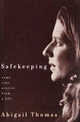
 SAFEKEEPING and A THREE DOG LIFE. I am in love with these books. Abigail Thomas has changed the way I think about memoir. She's dispensed with the notion of the singular narrative arc, and tells her life the way real people tell stories on themselves--in fragments, with tangents, and echoes, and repetition, and reframed events, and strategic omissions. SAFEKEEPING tells of her second marriage, and A THREE DOG LIFE tells of her third. Tragedy and bad luck all over the place, but they teach gratitude. I want to write like her when I grow up.
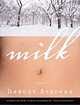 MILK. Darcey Steinke's take on religious phenomena is striking and refreshing, in a world where most literature with spiritual subject matter is either party-line-religious or angry-atheist. In the world of this novel, seeing God is a mystical gift, but we're never quite sure if mental illness doesn't play a role too. Members of the clergy are troubled human beings, with sexual urges, vocational doubts, and conscience.
 FUN HOME. Alison Bechdel's graphic memoir made me weep on the subway. And also made me cover the page, riding the train with the Flatbush God Squad, suddenly aware I was looking at pictures of girls in flagrante. Told episodically, it's a bittersweet gay coming-out story. Sweet, the way Bechdel's inner lesbian light goes off from reading French women's literature. Sad, the way her father lived a life in the closet, which turned him into a ball of angst, a difficult person to live with. Brilliant drawings of her childhood homestead, a fixer-upper Victorian, with markers of the 1970's tossed in.
It's been a momentous reading year for me, thanks to the 2 hours I spend daily on the subway. And since my focus here is on what resonated for me, I'll talk about these books from memory.
I'm not a journalist, I'm not factchecking, and I'm not writing your bleeping term paper for you either. (So HA! all you dot-edu-ers in my web stats, all searching for book reviews you can turn into plagiarized schoolwork. Do other bloggers have this problem?)
So here's what I read and loved and remembered in 2007, not counting books by people I know, where my reading pleasure was tainted by bias.
LET THE NORTHERN LIGHTS ERASE YOUR NAME. Vendela Vida is almost a miniaturist. This slim novel, the story of a mourning American woman's journey to Lapland, has some of the cleanest, freshest, most compact language I have ever seen. Don't rush through it, though it moves quickly. Savor the cool, tiny chapters and mirrored metaphors. Her precision is rare. This author deserves more attention than she gets. PAINT IT BLACK. Janet Fitch's fat Los Angeles novel is almost the anti-Vida. Another mourning character with a need for mothering. Only this time a hot, dry landscape, and hot language to go with it. Lush, big narrative chapters, deep character study. The troubled, druggie protag stayed with me long after I put the book down. And I adore Fitch's LA--it resembles the LA I've known and visited more than anything else I've read. NO ONE BELONGS HERE MORE THAN YOU. Miranda July has nailed the square peg thing. The characters in her acclaimed short stories are hopelessly needy and lacking in social skills. Readers are left with a melancholy longing to connect with other human beings, and a dark conviction that this connection will never live up to expectations. Oh yeah, and it's funny. July's ear for dialogue is one of a kind.SAFEKEEPING and A THREE DOG LIFE. I am in love with these books. Abigail Thomas has changed the way I think about memoir. She's dispensed with the notion of the singular narrative arc, and tells her life the way real people tell stories on themselves--in fragments, with tangents, and echoes, and repetition, and reframed events, and strategic omissions. SAFEKEEPING tells of her second marriage, and A THREE DOG LIFE tells of her third. Tragedy and bad luck all over the place, but they teach gratitude. I want to write like her when I grow up. MILK. Darcey Steinke's take on religious phenomena is striking and refreshing, in a world where most literature with spiritual subject matter is either party-line-religious or angry-atheist. In the world of this novel, seeing God is a mystical gift, but we're never quite sure if mental illness doesn't play a role too. Members of the clergy are troubled human beings, with sexual urges, vocational doubts, and conscience. FUN HOME. Alison Bechdel's graphic memoir made me weep on the subway. And also made me cover the page, riding the train with the Flatbush God Squad, suddenly aware I was looking at pictures of girls in flagrante. Told episodically, it's a bittersweet gay coming-out story. Sweet, the way Bechdel's inner lesbian light goes off from reading French women's literature. Sad, the way her father lived a life in the closet, which turned him into a ball of angst, a difficult person to live with. Brilliant drawings of her childhood homestead, a fixer-upper Victorian, with markers of the 1970's tossed in.
Thursday, November 08, 2007
Anthologized!
 I was delighted to have my contributor's copies of ONE ON ONE: THE BEST WOMEN'S MONOLOGUES FOR THE 21ST CENTURY arrive in my mail yesterday. Don't you just love the colors?
I love the insides too. It's a resource book for women looking for fresh audition material. Some of it is from familiar playwrights (both women and men)--Neil LaBute, Naomi Iizuka, August Wilson. Some of it is from people I admire up close--Bob Shuman (also an editor of the anthology!), Kathleen Warnock. And some from legends of monoperformance, like Lydia Lunch and Anna Deavere Smith. It's an exciting collection, designed to push the envelope a little, and I'm honored to be a part of it! My piece is something I thought of as a flash fiction thing...until now...
Monday, September 10, 2007
Another Kind of Peek Under the Hood
Jim Ruland, of LA's Vermin on the Mount fame, is celebrating the anniversary of his short story collection, BIG LONESOME, by giving the stories-behind-the-stories in this blog. It's worth a read. Ruland's work relies heavily on research, and his process is instructive for anyone else who might like to tell stories that take place in worlds other than our own.
My favorite in the collection is "A Terrible Thing in a Place Like This," the one set in a 19th-century slaughterhouse. In his blog, he doesn't exactly tell us where his fiery, rich prose comes from, but he does let us in on the source for the subject matter, the extensive reading he did before composing the story. His initial burst of research, into a specific historical event, uncovered numerous characters and a setting, but he didn't have an entry into the story until he read the local newspaper from the thirty days before and after the event. And the authorial angle he found comes not just from coverage of the event, but from everything else in the paper--the editorials, even the ads--that gave him a real sense of the emotional landscape of the time.
My favorite in the collection is "A Terrible Thing in a Place Like This," the one set in a 19th-century slaughterhouse. In his blog, he doesn't exactly tell us where his fiery, rich prose comes from, but he does let us in on the source for the subject matter, the extensive reading he did before composing the story. His initial burst of research, into a specific historical event, uncovered numerous characters and a setting, but he didn't have an entry into the story until he read the local newspaper from the thirty days before and after the event. And the authorial angle he found comes not just from coverage of the event, but from everything else in the paper--the editorials, even the ads--that gave him a real sense of the emotional landscape of the time.
Thursday, August 09, 2007
Your Own Brand of Sumo

Near the end of Robert Olen Butler's FROM WHERE YOU DREAM: THE PROCESS OF WRITING FICTION, he tells his workshop students:
...when sumo wrestlers are interviewed, they always say the same thing--they barely move their lips--no matter what they're asked, it all boils down to 'I'm going to do my brand of sumo, and I'm going to do my best.' That's it, folks. That's the lesson of the universe.
This, to me, was the book's only big piece of "universal" writing advice; the rest of it focuses on Butler's particular brand of sumo, which (as the subtitle promises) is more about process than analysis, more about heart than head.
Butler's argument, distilled from lectures by editor Janet Burroway, is that fiction can only begin to work if it is coming from the author's unconscious, or "white-hot center." Toward that end, he gives his own method of accessing the unconscious, which involves finding the emotional center of an event--the yearning--then, without naming emotions, exploring concrete sensual details, with a filmic eye.
He shares his own process, even more specifically, outlining his index card methodology. His first step in writing a novel is to sit and daydream out the scenes, without writing them, then jot the basics of each scene on a notecard. Then he plays with the order of the cards, dreams new scenes as necessary. Then he writes the scenes, always in order.
You know me, I always love a peek under the hood. I'm a process junkie, and it's helpful to find more tools for the box. His approach is like method acting: story driven by moment-to-moment motivations, use of sense memory. But, I believe (like many actors have told me), the Method is potentially dangerous if turned into a religion.
The first two sections of the book are, like the good parts of religion, invigorating and inspiring. The first, "The Lectures," gives the basic foundation of Butler's approach to fiction, the writer's "trance" to access the unconscious, the "composting" of concrete memory for future stories. (He suggests journaling in concrete images, not analytic narrative, and you know I love that.) And the second section, "The Workshop," is transcripts of his interaction with students, in which he literally pulls sense details out of them, and stops them when they analyze. It reminds me of Sandy Meisner's book for actors, the next best thing to being in a class. (And by the way, writers can benefit from Meisner's book too.)
But the third section of Butler's book is where the religion-of-the-dreamstate turns dangerous, in my view. It contains full text of three early-draft student stories, followed by Butler's in-class analysis of them. And he judges the stories on whether or not they appear to come from the unconscious. (Like an acting teacher's judgment of "indicating" vs. "living" emotion, if you will.) He encourages students to find moments of "harmonic resonance" in peer work, where they "thrum" with the characters. On the one hand, this is refreshing as hell--you mean we don't have to analyze the POV and rising action crap? And I must admit, in my own work, I've found the most helpful critiques are often simply "I'm feeling _____ now," jotted in the margins of the manuscript.
But writers are not actors. They are not the medium for the finished work. We get the privilege of stepping away and letting the work have a life of its own. Butler the teacher-critic pronounces judgments like this: Story A was written from the analytic mind (GONG!), Story B was written from the unconscious (DING! DING! DING!). And while I agree with his assessment of the success/nonsuccess of these three stories, I find it presumptuous to guess at the writer's state of mind during composition, or to judge the purity of one thinking process over another.
Barbara DeMarco-Barrett, on her awesome radio show, often asks her guests questions like, "Do you write your sentences over and over, or do they just come out that way?" (I paraphrase, apologies.) More often, the guest claims to bang on the work until they get it right. I would argue that the presence or absence of the writer's dreamstate is not necessarily evident in the results. For many writers I admire, it's more trial and error than flow (what Butler calls being in "The Zone").
So my wishy washy recommendation is read this book for the tools and inspiration (inspired about 30 pages out of me! Thanks ROB!), but try not to drink the Kool-Aid. It could be a recipe for writer's block and/or quitting altogether. Sometimes battling with a problematic story is worth it. Sometimes early readers find cool emotions in the work that you didn't feel or intend, and this is a raw material you have authored that you can work with. It's okay to make your own clay. It may take longer, being a "draft writer," as Butler puts it, but so be it. The Annie Lamott-esque "shitty first drafts" need not be composted.
What do you guys think? Can you fake the soul of a story with technique, and if so, is the story any less genuine? Can you make readers "thrum" without "thrumming" yourself? Or, is finding your resonant subject matter the main battle, and the technique thing secondary? Anyone else have a response to this book?
Friday, July 27, 2007
Crazy, Jr.

I haven't been a big reader of realist YA fiction since my Judy Blume days, but Ned Vizzini's IT'S KIND OF A FUNNY STORY landed in my path and I decided to give it a test. Not surprisingly, it relies on the usual coming-of-age narrative conventions--character learns lessons, individuates from his family, resists dangerous friends, has a crush on someone worthy and musters the courage to...you get the jist--but this reader loves those narrative conventions, so I happily went along for the ride.
Did I mention it takes place in a mental ward? Oh yeah, that. The fifteen-year-old hero, Craig, suffers from depression and anxiety, triggered by his hard-won admittance to NYC's famous "Executive Pre-Professional High School." (Could this be the same as "Competitive High" in the kickass memoir, GIRLBOMB?) Craig is unprepared for the new pool of students, most of whom seem to ace their classes without trying. He struggles with the workload and feelings of inferiority. Zoloft helps, but then Craig stops taking it, loses his ability to eat and sleep, has a bad night of suicidal ideation, and checks himself into the psychiatric unit of the hospital down the block.
Here is where the story starts to enter fresh territory, for this reader. Far from the torture chamber psych wards we so often see in film and fiction, Vizzini's hospital is a place of compassionate routine. He captures well the patients' simultaneous need to stay and urge to leave--the locked doors cage them in, but also provide comfort, keeping the sources of anxiety outside. Craig compares the ambiance to preschool, a quality he both needs and resents. And after a week (Craig's is a mild case, compared to the other patients), he has found a few coping tools he can take home with him.
As a cultural document, Vizzini's novel functions on two major levels. On one, it demystifies the interior of a psych facility, with authentic detail and gentle humor, which makes it a not-scary place for kids to seek needed help. But the other, bigger undercurrent is an indictment of the pressure put on kids to be "gifted," to succeed early, even in families where the parents exert no pressure at all. The pressure comes from somewhere, but where? Can we shelter our children from it? Should we? How do we teach kids to be gentle with themselves but also survive, in a world that demands perfection?
The story is told in a first-person teenaged vernacular that might initially be off-putting to some adult readers ("'Don't bug Craig,' Ronny is like."), but I found it akin to reading anything in dialect (Mark Twain, Irvine Welsh)--once I started to hear it, it grew on me and enhanced the story, making moments like this sing with a kind of disarming wisdom:
...Even at my most functional, I wasn't someone you'd pay a lot of attention to; you wouldn't see me in the halls and go "There he goes, Craig Gilner--I wonder what he's up to." You'd see me and go, "What does that poster say behind that guy--is the anime club meeting today?"
And too, there are moments of sophisticated lyricism, like this first meal in the ward, which made me really start rooting for Craig:
...I eat because that's what people do. And somehow when the food is put in front of you by an institution, when there's a large gray force behind it and you don't have to thank anyone for it, you have the animal instinct to make it disappear, before a rival...comes along and snatches it away. I think, I think as I chew, my problem might be too much thinking.
I'm so jealous of that "thinking" sentence I can't stand it. I'll stop here. I won't talk about the author's age (you can Google this youngster yourself), or how much I envy his diligence and focus. I won't bitch about his early success being an ironic, implicit endorsement of the pressure-cooker in which his narrator suffers. Forget the story-behind-the-story. It's a worthy read, regardless of its author's age, not because of it. And, despite references to pot smoking and teen sex, it's safe to give to your kids.
Wednesday, May 16, 2007
Made Me Giggle the 5 Train Today

In her collection of essays/lectures, NEGOTIATING WITH THE DEAD: A WRITER ON WRITING, Margaret Atwood reflects on her black-clad ("like Hamlet--") bohemian poet days in the early 1960's, when the coffee houses had "mandatory Chianti-bottle candleholders." A morsel:
Another thing was--how can I put this? It was borne in on me that some of these people--even the published ones, even the respected ones--weren't very good. Some were wonderful at times, but uneven; others were insufferably mannerist; others were clearly there mostly to pick up women, or men. Could it be that getting through the door into the swarming poetic anthill wasn't necessarily a guarantee of anything? What then was the true Certificate of Approval? How would you ever know whether you'd made the grade or not, and what was the grade, anyway? If some of these people were deluded about their talents--and it was clear they were--was it possible that I might be as well? And come to think of it, what was "good?" And who determined that, and what litmus paper did they use?
Some things don't change. The candleholders, maybe, or the fashions. But we've all felt this at one time are another: that person up there on mic is overstepping her bounds. Am I too? It can be crippling, it can be funny, it can turn you off from poetry forever. Or, you learn to love the earnestness, like I somehow did, and lower your standards, so that you can keep writing. It's a dilemma.
Is the blogosphere the new Chianti-candled coffehouse? Aren't you glad we can wear our pajamas? Do we worry about being "good," or are we just happy to have a free forum? Do we do it for the sheer love of free speech, warts and all? And aren't the warts kind of cool?
Saturday, May 05, 2007
Another Novel Way to Promote a Novel!

Canadian debut novelist Claire Cameron is doing a truck stop tour for her novel, THE LINE PAINTER. She is listing appearances and reporting back on her blog. Worth a look!
Friday, April 20, 2007
My New Favorite MFA Program
If you haven't checked in on Tao Lin lately, do! His two new books are coming out in May from Melville House , a simultaneous release of the novel EEEEE EEE EEEE and the collection BED. If you haven't had the experience of hearing him read, here's a sample, from the legendary KGB Bar (& thanks to 3AM for the link):
That smile! Which sneaks out, disarmingly, in his pauses. And that poem, "the MFA in hamsters," which had me in giggles today, but left left a melancholy aftertaste. A fresh voice not to be missed. It's rare, for me, to have such an emotional reaction to such a deadpan delivery. His inquiry is relentless. He holds up a funhouse mirror, and dares us to peer in with him, nervous laughter and all, to see the animal versions of ourselves.
That smile! Which sneaks out, disarmingly, in his pauses. And that poem, "the MFA in hamsters," which had me in giggles today, but left left a melancholy aftertaste. A fresh voice not to be missed. It's rare, for me, to have such an emotional reaction to such a deadpan delivery. His inquiry is relentless. He holds up a funhouse mirror, and dares us to peer in with him, nervous laughter and all, to see the animal versions of ourselves.
Friday, April 06, 2007
Alix Kates Shulman and the Long Thought

A recurring motif in Alix Kates Shulman's memoir, DRINKING THE RAIN, is that of a younger woman paying close attention to an older one. One day on the beach, with her friend Margaret, ten years her senior, Shulman notes: "I study her aging body to see what's coming next for me." And later, Shulman befriends a younger colleague, Clara, "despite the twenty-year gap in our ages (or perhaps because of it: she wants to see what's coming, I want to know what's new)..." My experience reading the memoir falls into the same category, and the book has proven to me that some of life's most enlightening and exciting experiences happen in middle age. If this is what's coming, bring it on. The book is a thoughtful and hopeful meditation on the gifts of aging.
Told in present tense, the memoir has a simple premise and framework, which allows Shulman to ruminate and digress in interesting directions. It starts with a radical, if not original, personal experiment: at age fifty, she lives a summer alone in an island cabin in Maine, an hour's walk of beach from any civilization, without electricity or phone, the only water from the rain collected in a cistern. The idea is to get some focused time on a writing project, a goal all of us can identify with.
But early on, the plan changes course:
...for the first time ever, I allow myself the reckless thought that it might not matter if I write or not: with no one here to judge me, discovering what exactly I will do may be a more interesting project than writing a book.
What follows is a season of trial-and-error lessons involving the stuff of her immediate surroundings. With the help of Euell Gibbons books found in the cabin, she learns to forage vegetables and shellfish. She takes time gathering and preparing (beautifully described) meals for one. She wears what is comfortable and available; she consumes the college readers in the cabin instead of the books she brought along. And this new, improvisational approach to sustenance is nothing short of an awakening. This long period of solitude teaches her to appreciate "long thoughts." And time isn't as limited as she once believed: "...the more lavishly I spend time, the more I seem to have, like the wild leaves I pluck for salad which grow more lushly the more I pick."
Leaving the magic summer behind and returning to New York City proves challenging for Shulman, who has been deeply involved in the women's movement for years. How can she tell her friends she craves solitude now more than solidarity, without triggering anger and worry? She keeps dried seaweed in her home kitchen, and other island mementos, but they don't bring back the feelings she had when she was there. A Buddhist friend gives her a shot of perspective--the island taught her to pay attention to her surroundings. And this can be done in the city too.
Shulman returns to the island many times over the course of this book, but also takes us to the Rocky Mountains, New Mexico, and Europe, and into the cold war of her New York apartment, where she is struggling through a divorce. The cabin on the island becomes a frame for a bigger story, a guiding metaphor for how she chooses to live, which involves plenty of "long thoughts" and healthy self-study.
We readers get to witness a person making peace with who she is, with what she can control and what she can't, and falling in love with the world around her, crags and all. And as the natural resources on her island become tainted with encroaching civilization, her reaction is not despair and panic, but flexibility, and humble inquiry.
Many thanks to Barbara DeMarco-Barrett for introducing me to this exciting voice. I highly recommend her podcast, Writers on Writing.
If you're interested, Alix Kates Shulman will be giving a lecture at NYC's National Arts Club on April 17. The topic is one dear to us writers: how she turns one life into multiple narratives.
Thursday, March 08, 2007
And Speaking of Snobbery (Mine Too)
Via Ed Champion again, Jennifer Weiner responds to those who claim genre fiction is inferior:
Doesn’t it mean that the Apocalypse is coming if their gaze wavers for even an instant from the MFA-holding, quarterly-publishing, Park-Slope-dwelling literary wonders of the moment to discuss the books that the “less-educated basic readers” actually read, discuss and enjoy?
I love the way Weiner champions genre fiction, not just on her blog, but in the press, and consistently. Her argument: people who declaim chick lit are just misogynists in drag. She makes me want to like chick lit, on principle. I wanna be of the people, maybe. Today, anyway.
Doesn’t it mean that the Apocalypse is coming if their gaze wavers for even an instant from the MFA-holding, quarterly-publishing, Park-Slope-dwelling literary wonders of the moment to discuss the books that the “less-educated basic readers” actually read, discuss and enjoy?
I love the way Weiner champions genre fiction, not just on her blog, but in the press, and consistently. Her argument: people who declaim chick lit are just misogynists in drag. She makes me want to like chick lit, on principle. I wanna be of the people, maybe. Today, anyway.
Thursday, March 01, 2007
Another Book Trailer...Girlbomb!
My friend Janice has her paperback for Girlbomb: A Halfway Homeless Memoir coming out next week. And here's the trailer! Congrats, Janice, on both.
I recommended the memoir highly last year when the hardback came out, and I still do. It's about an adolescence spent in and out of teen shelters in NYC. Janice's voice is crisp and funny, and she has a keen sense of pacing. It's a portrait of an era, a place, and a quirky, interesting individual coming into her own.
What is "home?" Where can a girl feel safe? What are nuns really like? Read and learn.
Subscribe to:
Posts (Atom)