Friday, December 21, 2007

My Inspiring Reads of 2007

Geez, has it been a whole month since I last posted? Well, at least that's proof I'm not addicted to blogging. Any more, that is.


It's been a momentous reading year for me, thanks to the 2 hours I spend daily on the subway. And since my focus here is on what resonated for me, I'll talk about these books from memory.


I'm not a journalist, I'm not factchecking, and I'm not writing your bleeping term paper for you either. (So HA! all you dot-edu-ers in my web stats, all searching for book reviews you can turn into plagiarized schoolwork. Do other bloggers have this problem?)


So here's what I read and loved and remembered in 2007, not counting books by people I know, where my reading pleasure was tainted by bias.


LET THE NORTHERN LIGHTS ERASE YOUR NAME. Vendela Vida is almost a miniaturist. This slim novel, the story of a mourning American woman's journey to Lapland, has some of the cleanest, freshest, most compact language I have ever seen. Don't rush through it, though it moves quickly. Savor the cool, tiny chapters and mirrored metaphors. Her precision is rare. This author deserves more attention than she gets.


PAINT IT BLACK. Janet Fitch's fat Los Angeles novel is almost the anti-Vida. Another mourning character with a need for mothering. Only this time a hot, dry landscape, and hot language to go with it. Lush, big narrative chapters, deep character study. The troubled, druggie protag stayed with me long after I put the book down. And I adore Fitch's LA--it resembles the LA I've known and visited more than anything else I've read.


NO ONE BELONGS HERE MORE THAN YOU. Miranda July has nailed the square peg thing. The characters in her acclaimed short stories are hopelessly needy and lacking in social skills. Readers are left with a melancholy longing to connect with other human beings, and a dark conviction that this connection will never live up to expectations. Oh yeah, and it's funny. July's ear for dialogue is one of a kind.
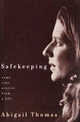


SAFEKEEPING and A THREE DOG LIFE. I am in love with these books. Abigail Thomas has changed the way I think about memoir. She's dispensed with the notion of the singular narrative arc, and tells her life the way real people tell stories on themselves--in fragments, with tangents, and echoes, and repetition, and reframed events, and strategic omissions. SAFEKEEPING tells of her second marriage, and A THREE DOG LIFE tells of her third. Tragedy and bad luck all over the place, but they teach gratitude. I want to write like her when I grow up.
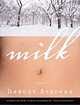


MILK. Darcey Steinke's take on religious phenomena is striking and refreshing, in a world where most literature with spiritual subject matter is either party-line-religious or angry-atheist. In the world of this novel, seeing God is a mystical gift, but we're never quite sure if mental illness doesn't play a role too. Members of the clergy are troubled human beings, with sexual urges, vocational doubts, and conscience.


FUN HOME. Alison Bechdel's graphic memoir made me weep on the subway. And also made me cover the page, riding the train with the Flatbush God Squad, suddenly aware I was looking at pictures of girls in flagrante. Told episodically, it's a bittersweet gay coming-out story. Sweet, the way Bechdel's inner lesbian light goes off from reading French women's literature. Sad, the way her father lived a life in the closet, which turned him into a ball of angst, a difficult person to live with. Brilliant drawings of her childhood homestead, a fixer-upper Victorian, with markers of the 1970's tossed in.

Wednesday, November 21, 2007

Come Hear Us Read, November 28th, NYC

THIS JUST IN.....

+++++++++++++++++++++++++++++++++++++++++++++++++++++

NEW Reading Series!!

Friends of Tuesday Shorts are now appearing monthly at the Boxcar Lounge (http://boxcarlounge.com/): Our FIRST phenomenal reading is November 28, 2007, 8:00 PM, 168 Avenue B, East Village NYC.

Please join us and forward to anyone you know. We wanna see your shorts there too!Hosted by Shelly Rae Rich, writer (see http://blog.shellyraerich.com/) and co-editor of Tuesday Shorts (http://myspace.com/tuesdayshorts), the series kicks off with an eclectic group of talent.

And here they are…..

Rusty Barnes grew up in rural northern Appalachia. He received his B.A. from Mansfield University of Pennsylvania and his M.F.A. from Emerson College. His fiction, poetry and non-fiction have appeared in journals like Pindeldyboz, Post Road, and Red Rock Review. After editing fiction for the Beacon Street Review (now Redivider) and Zoetrope All-Story Extra, he co-founded Night Train, a recently reinvented literary journal, which has been featured in the Boston Globe, The New York Times, and on National Public Radio. Sunnyoutside Press published a collection of his flash fiction, Breaking it Down in November 2007.

Linda DiGusta is a freelance writer and artist. Active in the NYC theatre for more than a decade as a director, designer and performer, the inventiveness of acting and collaboration on a screenplay re-kindled her early interest in fiction, and she has had several short stories published in print and online. In the fine art world, she currently has 2 still-life drawings in the exhibition "Lineal Investigations" at the Housatonic Museum of Art, and her assemblages and drawings have been seen in group exhibitions in Manhattan and Brooklyn, including at Art Gotham in Chelsea this month. Integrating art and writing, Linda also writes for and serves as Executive Editor of Resolve40.com, an online publication created by artists in 2005 to present the art world from a fresh point of view. She lives in midtown Manhattan with artist Mark Wiener and their multi-species family. More at: http://www.lindadi.com/ and http://www.resolve40.com/.

Anne Elliott has performed her poetry, with and without ukulele, at the Whitney Museum (with the Beats show), PS122, Lincoln Center, The Poetry Project at St. Mark's, Woodstock '94, and other venues in and out of NYC. Her poems have appeared in Aloud: Voices from the Nuyorican Poets' Cafe, Verses that Hurt: Pleasure and Pain from the Poemfone Poets, and other anthologies. Her fiction has appeared in Hobart, Pindeldyboz, FRiGG, Ars Medica, and others, and she blogs on the writing life and feral cat management at http://assbackwords.blogspot.com/.

Carol Novack, a former criminal defense lawyer and Australian government grant recipient, is the author of a chapbook of poetry, play, collaborative CD and two collaborative films. Writings may or will be found in many publications, including American Letters & Commentary, Action Yes, Del Sol Review, Diagram, 5_trope, Gargoyle, Journal of Experimental Fiction, La Petite Zine, LIT, Notre Dame Review, and the Star*Vigate anthology of best online writings. Carol publishes the multi-media e-journal Mad Hatters' Review (http://madhattersreview.com/), curates a reading series at the KGB Bar, and runs lyrical fiction writing workshops. She'll be a resident at The Vermont Studio Center next year. For additional details, see her blog (http://carolnovack.blogspot.com/).

Still NaNoing (Sort Of)

Well, folks, the same thing happened to me that happens to a lot of people in November...life. Dayjob stuff captured my attention, and kept me from thinking about my NaNoWriMo novel last week. I've crossed the 25,000 word halfway mark, but I'm way behind quota, and there's no way I'll catch up.

Still, it's 25,000 words I didn't have before. And I'm still going. I'm doing about 1500 a day at the moment, but once you're behind, you're behind. So be it! It's supposed to be an exercise in unconditional self-love, so I'm gonna go easy on myself.

Yell at me if you think I've got it wrong.

Thursday, November 08, 2007

Anthologized!

I was delighted to have my contributor's copies of ONE ON ONE: THE BEST WOMEN'S MONOLOGUES FOR THE 21ST CENTURY arrive in my mail yesterday. Don't you just love the colors?

I love the insides too. It's a resource book for women looking for fresh audition material. Some of it is from familiar playwrights (both women and men)--Neil LaBute, Naomi Iizuka, August Wilson. Some of it is from people I admire up close--Bob Shuman (also an editor of the anthology!), Kathleen Warnock. And some from legends of monoperformance, like Lydia Lunch and Anna Deavere Smith. It's an exciting collection, designed to push the envelope a little, and I'm honored to be a part of it! My piece is something I thought of as a flash fiction thing...until now...

Wednesday, November 07, 2007

WriMo Update

In case you're wondering, I'm right on schedule for NaNoWriMo. As of this moment, my November novel's 11,681 words. And still, no plot has emerged. But you know the Wrimo motto: No Plot? No Problem!

Plus, you know how I feel about plot. I won't re-rant on it today.

This novel, or whatever it is, feels more like a meditation, or rumination. More spiral in shape. The themes are coming through, or I'm digging at them. I feel like it hangs together on metaphor and theme, but not on a horizontal timeline.

One thing I'm learning is I like the 1667 word a day quota. I've worked before with a 300 word a day quota, and now I'm thinking that's way not enough. The bigger quota gets me into the composition-head more deeply. It hurts my performance at work, probably, but it's only for a month, right? All my daydreaming out the window.

The other thing I'm learning is the bigger quota means I absolutely can't reread more than a day's work as I get started on a new writing session. I usually do a lot of rereading and tweaking, in my "old" writing process. The Wrimos say don't reread AT ALL, and I disagree with that. Often I reread yesterday's work and find places where I can flesh out the detail. And if building wordcount is the goal, that helps more than it hurts. But reading back any more than that results in memorizing the prose, which only makes it harder to kill the darlings later. I memorize the cadence of a sentence and then it feels "weird" (for lack of a more accurate word) to cut part of it.

Plus, there's no cutting in NaNoWriMo. That's rule one.

I'll keep you posted. Let me know if you're doing it too!

Thursday, November 01, 2007

Wednesday, October 31, 2007

Because I'm Loco

This projaholic has resisted NaNoWriMo for years but the prospect of writing something that

1. will never be read (not even by me, not even while I'm writing it)
2. doesn't have to be good
3. will not take me years and years to finish

took over my brain. At long last, I will write my "workplace novel." I've got my list of prompts, and I'm on my way to writing some real unpublishable garbage. Go me!! And all you other Wrimos out there. Let's toast to lowering our standards. I'll let you know how it goes.

If it doesn't work out I'll knit something ugly and then unravel it. Same idea...

Wednesday, October 24, 2007

Cat Theater


It's actually a little funnier with the sound off, I learned. Try imagining this alternative script:

Meow.
You already said that.
Meow.
Don't be a moron.
Meow. ..that wasn't very nice.
You're stating the obvious.
You never understand me.
Oh, not this again.
Why can't you just listen?
Oh, please.
I don't know what to say.
Oh, baby, I love you. You know that.
I know. I love you too.


Maybe you have an alternative script to share.

I dreamed last night we had to get our cat Ava a white dress for her coming-out ball. She was such a tomboy about it, and really did not understand the stakes. She had to be prepared for the Catillion!

Thursday, October 18, 2007

So I'm Not the Only One Too Late to Buy My Own Name.Com

I'm not aware of a community of Anne Elliotts, but there are a lot of us out there. My hubby suggested I buy the domain theotheranneelliott.com.

From today's Wall Street Journal, check out Andy Jordan, who reaches out to the other Andy Jordans. Ha!

Wednesday, October 03, 2007

Victor LaValle on Voice (with a Capital V)

In October's Hobart web edition, Amy Minton interviews Victor LaValle, author of SLAPBOXING WITH JESUS and THE ECSTATIC on the subject of narrative voice.

A sample of LaValle's no-nonsense advice:

I’m really just trying to say that it’s a mistake to think of Voice (or voice) or writing (and Writing) as a simple question of mechanics. When you read your work you should try to recognize the fact that your Voice is already there. Even just in some early form. Don’t reread and revise with the goal of making this one story better or tighter or publishable (at least not to start). Look at it and ask, Do I recognize myself in here? Again, I don’t mean your literal body or personal history (not necessarily). I mean do you find your sense of humor (or lack thereof)? Your intelligence (your specific kind, not just general IQ)? Your concerns? Your sense of joy and tragedy? These technical issues of dialogue and pacing and phrasing and language are red herrings. They’re actually distractions from the real question at hand: are you making work that is singularly your own? Fiction that, for one reason or another, no one else can produce?

Enjoy the rest of the interview...

Monday, October 01, 2007

JMWW--Check it Out!

I have a short series of very short stories in the new JMWW. It's a beautiful issue. I'm crazy about the artwork by Elizabeth Crisman. And the flashes by Christian Bell are well worth a read. Enjoy!

Monday, September 10, 2007

Another Kind of Peek Under the Hood

Jim Ruland, of LA's Vermin on the Mount fame, is celebrating the anniversary of his short story collection, BIG LONESOME, by giving the stories-behind-the-stories in this blog. It's worth a read. Ruland's work relies heavily on research, and his process is instructive for anyone else who might like to tell stories that take place in worlds other than our own.

My favorite in the collection is "A Terrible Thing in a Place Like This," the one set in a 19th-century slaughterhouse. In his blog, he doesn't exactly tell us where his fiery, rich prose comes from, but he does let us in on the source for the subject matter, the extensive reading he did before composing the story. His initial burst of research, into a specific historical event, uncovered numerous characters and a setting, but he didn't have an entry into the story until he read the local newspaper from the thirty days before and after the event. And the authorial angle he found comes not just from coverage of the event, but from everything else in the paper--the editorials, even the ads--that gave him a real sense of the emotional landscape of the time.

Wednesday, August 22, 2007

Littermates

littermates

I apologize for not keeping you posted on our outdoor cat situation. We still have five. Four are represented here, demanding breakfast. From the left: Rrose, her brother Marcel, and her children, Elvis Memphis and Elvis Vegas. Their brother, Elvis Hollywood, succumbed to a car. Their cousin (we think?) Junior disappeared. Vince, the patriarch, was too close to the camera to photograph this morning. He breaks into the house on a regular basis.

Rrose is getting tamer, and fatter! We aren't trying to touch her, which helps in the trust department. She has decided she likes us, and will now pose for photos in exchange for food. Isn't she beautiful? Look how she cocks her head!

Never mind that they all piss all over the place and irritate the neighbors. Pawprints all over the cars. Garages that stink. Yes, we MADE these cats exist by feeding them! It's a weird existential question. None of them are adoptable, they never will be, no matter how friendly they get, unless you like cat pee in your house. We are learning this with Angus, Vince's littermate, the one we brought inside. Unfortunately, he's way too cute to banish.

But Rrose, I have a special place for her in my heart. Poor thing was skinny and perpetually pregnant, until we got her spayed and eartipped. She's the most timid. She's also the most susceptible to catnip. I love watching her get fat and courageous.

And the kids? The white Elvii? Their dad, a neighbor cat named Yves, is AWOL. Deadbeat. But Marcel was a good uncle. He taught these nephews to hunt and beg like pros. They all huddle in a pile for warmth in the winter. Which is just around the corner.

The 500-Word Memoir

I entered Opium Magazine's 500-Word Memoir contest and managed to make the short list! I may not have a book-length memoir in me, but I could manage 450 words. I just wanted to support Opium, with my last-minute entry, since I have benefited from their terrific parties in the past. And now, not only this needed shot in the arm, but my net-friend Clifford Garstang is on the list too. Congrats, Cliff!

My story is about the 1972 Republican convention. I started it in Lynda Barry's class, on the assignment to list ten American presidents. So now you know it's not fiction. Yes, I really did shout, "Four more years!" I was caught up in the moment. I was also in first grade.

My politics have changed. My brother's too. For the better, I hope.

Support Opium. Watch their Literary Death Match TV. It's hilarious. And don't hesitate to comment...

Thursday, August 09, 2007

Your Own Brand of Sumo


Near the end of Robert Olen Butler's FROM WHERE YOU DREAM: THE PROCESS OF WRITING FICTION, he tells his workshop students:

...when sumo wrestlers are interviewed, they always say the same thing--they barely move their lips--no matter what they're asked, it all boils down to 'I'm going to do my brand of sumo, and I'm going to do my best.' That's it, folks. That's the lesson of the universe.

This, to me, was the book's only big piece of "universal" writing advice; the rest of it focuses on Butler's particular brand of sumo, which (as the subtitle promises) is more about process than analysis, more about heart than head.

Butler's argument, distilled from lectures by editor Janet Burroway, is that fiction can only begin to work if it is coming from the author's unconscious, or "white-hot center." Toward that end, he gives his own method of accessing the unconscious, which involves finding the emotional center of an event--the yearning--then, without naming emotions, exploring concrete sensual details, with a filmic eye.

He shares his own process, even more specifically, outlining his index card methodology. His first step in writing a novel is to sit and daydream out the scenes, without writing them, then jot the basics of each scene on a notecard. Then he plays with the order of the cards, dreams new scenes as necessary. Then he writes the scenes, always in order.

You know me, I always love a peek under the hood. I'm a process junkie, and it's helpful to find more tools for the box. His approach is like method acting: story driven by moment-to-moment motivations, use of sense memory. But, I believe (like many actors have told me), the Method is potentially dangerous if turned into a religion.

The first two sections of the book are, like the good parts of religion, invigorating and inspiring. The first, "The Lectures," gives the basic foundation of Butler's approach to fiction, the writer's "trance" to access the unconscious, the "composting" of concrete memory for future stories. (He suggests journaling in concrete images, not analytic narrative, and you know I love that.) And the second section, "The Workshop," is transcripts of his interaction with students, in which he literally pulls sense details out of them, and stops them when they analyze. It reminds me of Sandy Meisner's book for actors, the next best thing to being in a class. (And by the way, writers can benefit from Meisner's book too.)

But the third section of Butler's book is where the religion-of-the-dreamstate turns dangerous, in my view. It contains full text of three early-draft student stories, followed by Butler's in-class analysis of them. And he judges the stories on whether or not they appear to come from the unconscious. (Like an acting teacher's judgment of "indicating" vs. "living" emotion, if you will.) He encourages students to find moments of "harmonic resonance" in peer work, where they "thrum" with the characters. On the one hand, this is refreshing as hell--you mean we don't have to analyze the POV and rising action crap? And I must admit, in my own work, I've found the most helpful critiques are often simply "I'm feeling _____ now," jotted in the margins of the manuscript.

But writers are not actors. They are not the medium for the finished work. We get the privilege of stepping away and letting the work have a life of its own. Butler the teacher-critic pronounces judgments like this: Story A was written from the analytic mind (GONG!), Story B was written from the unconscious (DING! DING! DING!). And while I agree with his assessment of the success/nonsuccess of these three stories, I find it presumptuous to guess at the writer's state of mind during composition, or to judge the purity of one thinking process over another.

Barbara DeMarco-Barrett, on her awesome radio show, often asks her guests questions like, "Do you write your sentences over and over, or do they just come out that way?" (I paraphrase, apologies.) More often, the guest claims to bang on the work until they get it right. I would argue that the presence or absence of the writer's dreamstate is not necessarily evident in the results. For many writers I admire, it's more trial and error than flow (what Butler calls being in "The Zone").

So my wishy washy recommendation is read this book for the tools and inspiration (inspired about 30 pages out of me! Thanks ROB!), but try not to drink the Kool-Aid. It could be a recipe for writer's block and/or quitting altogether. Sometimes battling with a problematic story is worth it. Sometimes early readers find cool emotions in the work that you didn't feel or intend, and this is a raw material you have authored that you can work with. It's okay to make your own clay. It may take longer, being a "draft writer," as Butler puts it, but so be it. The Annie Lamott-esque "shitty first drafts" need not be composted.

What do you guys think? Can you fake the soul of a story with technique, and if so, is the story any less genuine? Can you make readers "thrum" without "thrumming" yourself? Or, is finding your resonant subject matter the main battle, and the technique thing secondary? Anyone else have a response to this book?

Wednesday, August 08, 2007

My Brother Gives Some Fatherly Advice


My brother was visiting friends and they said, hey, you wanna help us enter this contest? So they put him in front of the camera. I got a good laugh. Check it out! Vote too.

Wilbur Heard it Coming

Well, folks, you've seen the news about our very own Brooklyn tornado! I think we should call it a Brooklyn cyclone, but that's just me. Our dog Willie woke us up in extreme consternation at about 4:30 AM, crying and trying to sit on our heads. We didn't get it. We didn't hear any thunderstorm. YET.

The storm bypassed our neighborhood, save some minor flooding, so I walked the dog and went to work, like a normal day. But my train wasn't running. So I took a bus to another train. Then another. No go. Overheard people talking about a tornado, but didn't think much of it until I got home, and saw the mess on TV. Our mayor reminded us that people in the Midwest deal with this all the time, with much more damage and injuries. We were lucky.

Except for the fact that we rely on mass transit. I telecommuted, and had a surprisingly productive workday, with one traumatized doggy at my feet. So I don't have any exciting NY stories to tell. I feel for the people dealing with their auto and homeowners insurance now.

Friday, August 03, 2007

Milestone 70,000

Yay! I just wrote word number 70,549 on my new novel, ALMA. It's getting there. I'm in the penultimate chapters now! Conflict coming to a head! Haunting memories facing my heroine! Family members attempting to communicate and failing miserably! But loving each other nonetheless! More exclamation points! I'm putting them here so I'm not tempted to put them in the novel!

Back to work...

!!!!!!!!!!!!!!!!!!!!!!!!!

Monday, July 30, 2007

FRiGG #17--Stoked To Be In This Company

Friends, I found a home for my short story "War" in the fabulous online litmag, FRiGG, and I couldn't be more delighted.

The black and white artwork is rich and interesting. And a couple of the people I met at Tin House have stories there too!

You won't look at I Love Lucy the same after reading Alicia Gifford's "Desilu, Three Cameras." Adultery, impotence, venereal disease, death, and overeating! Interesting three camera technique on the story, too.

And Stefani Nellen gives us a triplet of short shorts, each told in brief scenes. My favorite of the three is "Metaphors; or: A Headless Rat," in which a couple finds meaning for their pairing through imagery, crafting their own story with a fatal selfconsciousness.

I'm pleased to have met these women, and to be part of this issue with them. And the rest of the issue rocks as well. Kudos to editor Ellen Parker.

Friday, July 27, 2007

Crazy, Jr.


I haven't been a big reader of realist YA fiction since my Judy Blume days, but Ned Vizzini's IT'S KIND OF A FUNNY STORY landed in my path and I decided to give it a test. Not surprisingly, it relies on the usual coming-of-age narrative conventions--character learns lessons, individuates from his family, resists dangerous friends, has a crush on someone worthy and musters the courage to...you get the jist--but this reader loves those narrative conventions, so I happily went along for the ride.

Did I mention it takes place in a mental ward? Oh yeah, that. The fifteen-year-old hero, Craig, suffers from depression and anxiety, triggered by his hard-won admittance to NYC's famous "Executive Pre-Professional High School." (Could this be the same as "Competitive High" in the kickass memoir, GIRLBOMB?) Craig is unprepared for the new pool of students, most of whom seem to ace their classes without trying. He struggles with the workload and feelings of inferiority. Zoloft helps, but then Craig stops taking it, loses his ability to eat and sleep, has a bad night of suicidal ideation, and checks himself into the psychiatric unit of the hospital down the block.

Here is where the story starts to enter fresh territory, for this reader. Far from the torture chamber psych wards we so often see in film and fiction, Vizzini's hospital is a place of compassionate routine. He captures well the patients' simultaneous need to stay and urge to leave--the locked doors cage them in, but also provide comfort, keeping the sources of anxiety outside. Craig compares the ambiance to preschool, a quality he both needs and resents. And after a week (Craig's is a mild case, compared to the other patients), he has found a few coping tools he can take home with him.

As a cultural document, Vizzini's novel functions on two major levels. On one, it demystifies the interior of a psych facility, with authentic detail and gentle humor, which makes it a not-scary place for kids to seek needed help. But the other, bigger undercurrent is an indictment of the pressure put on kids to be "gifted," to succeed early, even in families where the parents exert no pressure at all. The pressure comes from somewhere, but where? Can we shelter our children from it? Should we? How do we teach kids to be gentle with themselves but also survive, in a world that demands perfection?

The story is told in a first-person teenaged vernacular that might initially be off-putting to some adult readers ("'Don't bug Craig,' Ronny is like."), but I found it akin to reading anything in dialect (Mark Twain, Irvine Welsh)--once I started to hear it, it grew on me and enhanced the story, making moments like this sing with a kind of disarming wisdom:

...Even at my most functional, I wasn't someone you'd pay a lot of attention to; you wouldn't see me in the halls and go "There he goes, Craig Gilner--I wonder what he's up to." You'd see me and go, "What does that poster say behind that guy--is the anime club meeting today?"

And too, there are moments of sophisticated lyricism, like this first meal in the ward, which made me really start rooting for Craig:

...I eat because that's what people do. And somehow when the food is put in front of you by an institution, when there's a large gray force behind it and you don't have to thank anyone for it, you have the animal instinct to make it disappear, before a rival...comes along and snatches it away. I think, I think as I chew, my problem might be too much thinking.

I'm so jealous of that "thinking" sentence I can't stand it. I'll stop here. I won't talk about the author's age (you can Google this youngster yourself), or how much I envy his diligence and focus. I won't bitch about his early success being an ironic, implicit endorsement of the pressure-cooker in which his narrator suffers. Forget the story-behind-the-story. It's a worthy read, regardless of its author's age, not because of it. And, despite references to pot smoking and teen sex, it's safe to give to your kids.